Take the Defy Aging Quiz

Q:  Dr. Brickey what supplements do you take?


A:  Frankly, I take quite a few because I am at high risk for arteriosclerosis. I think in terms of three types of supplements:


    1. A GOOD MULTIVITAMIN

         In a perfect world, we would get all the vitamin, minerals, and antioxidants from the food we eat. But with less than optimal eating habits, soil depletion, and restaurant foods, most of us can’t count on our eating habits or foods to provide all the vitamins, minerals, and antioxidants we need.


     Generic and popular brands of multivitamins provide the basic vitamins and minerals. A multiple vitamin is far less expensive than taking vitamins and minerals individually. It also insures that vitamins and minerals are in healthy proportions to each other. (Too much of one vitamin or mineral can inhibit the use of certain other vitamins or minerals.)


      Besides cost, the differences between a generic or common brand name multivitamins and premium multiple vitamins are that the premium brands are more likely to:


    • use higher dosages


    • use the most effective variations of vitamins and amino acids
      Example: Vitamin E has eight chemical variations with four tocopherols and four tocotrienols. Many multivitamins use less expensive variations of E rather than the more effective bioidentical d˗alpha variation with d˗gamma tocopherols.


    • use multiple versions of a vitamin.
      Example: Vitamin D has two physiologically relevant forms D2 and D3. While D3 is believed to be metabolized more effectively, the vitamin is poorly understood and D2 may have a unique contribution to our health. Thus, some multiple vitamins include both.


    •  include trace minerals and antioxidants (e.g., extracts from vegetables, fruits, and berries).


     Thus, I take a very good comprehensive multiple vitamin with trace minerals and antioxidants. If you are willing to invest in the extra insurance of a premium multivitamin, there are several highly regarded premium multivitamins. My preference is SeaHealth|Plus, which has 17 fruit and vegetable extracts and 72 trace minerals.


    2. PARTICULAR HEALTH ISSUES


     If you have particular health risks, you may want to consider supplements that help with that issue. For example, if you have frequent urinary tract infections you may want to drink cranberry juice or spare the calories and take cranberry juice extracts (if you aren’t taking SeaHealth|Plus which has cranberry extract anyway). If you recently took an antibiotic, you might want to eat some yogurt that is rich in probiotics or take a probiotic supplement such as acidophilus.


     Being a male I take saw palmetto to reduce my risk or prostate cancer. Since I am high risk for cardiovascular problems, I take supplements as well to enhance cardiovascular health. I get several blood tests a year and use the results to help make adjustments in which supplements I use and the doses. 


    3. FISH OIL
     
        Cardiologists have been behind the times on this but now even the American Heart Association recommends:

Fish intake has been associated with decreased risk of heart disease. On the basis of available data, the American Heart Association recommends that patients without documented heart disease eat a variety of fish – preferably omega-3-containing fish – at least twice a week. Examples of these types of fish include salmon, herring and trout. Patients with documented heart disease are advised to consume about 1 gram of EPA + DHA (types of omega-3 fatty acids), preferably from fish, although EPA+DHA supplements could be considered, but consult with a physician first. For people with high triglycerides (blood fats), 2 to 4 grams of EPA + DHA per day, in the form of capsules and under a physician’s care, are recommended.


     A shift in Americans’ diet to more processed foods, corn oil, and soybean oil greatly increased omega-6 fatty acids in our diets. Further, these days few parents give their children cod liver oil (which is high in omega-3 fatty acids). Consequently, the ratio of omega-3 to omega-6 fatty acids has gone from a healthy 1:2 to 1:20. Having too much omega-6 fatty acids relative to omega-3s results in inflammation. There is an increasing consensus among researchers that inflammation is the common denominator of most chronic diseases including cardiovascular disease and diabetes.


     You could correct the imbalance by eating lots of fish such as tuna, salmon, and sardines, but that would expose you to a lot of PCBs, mercury, and other toxins in the fish. Unless highly refined, cod liver oil has the same problem. The easiest way to increase omega-3s is to take fish oil supplements.


     While an aspirin is an aspirin and vitamin C is vitamin C whether it is generic or a brand name, with fish oil it is extremely important to remove the PCBs, mercury, and other toxins the fish have consumed. This requires an expensive distilling and refining process. The person who has done the most research on fish oil and is extraordinarily thorough in removing the toxins is Dr. Barry Sears. You may choose to take chances on the quality of other vitamins but don’t compromise on quality of the fish oil you consume.


     Dr. Barry Sears is the creator of the Zone Diet, which balances healthy carbohydrates, fats, and proteins in Mediterranean style diet. In his latest best seller, Toxic Fat, Dr. Sears describes how inflammation is a major underlying cause of chronic diseases including cancer, cardiovascular disease, diabetes, and arthritis.

      Benefits of fish oil:


Side effects: While thinning the blood is usually desirable (the reason daily low dose aspirin is recommended), thinner blood slightly increases the risk of bruising or bleeding, nosebleeds, or stroke from hemorrhaging. It tends to have a cumulative effect with aspirin, Plavix or Coumadin.


  • Other health benefits   Research indicates that fish oil also:
    • helps with weight loss
    • helps reduce arthritis, diabetes, and other autoimmune diseases
    • enhances brain functioning and the brain’s gray matter volume
    • reduces macular degeneration (an eye disease)
    • may help with Alzheimer’s, depression, bipolar disorder, and schizophrenia
    • fosters healthy skin, hair, and nails


     With most supplements, the risk from using a generic brand is low—just that they may have cut corners to keep the prices low and dosages may be unreliable. With fish oil, however, the risks are high. Inexpensive fish oil is likely to contain lead, mercury, and PCBs.


      Dr. Barry Sears has focused his career on fish oil. His Omega|Rx fish oil is the gold standard. It goes through two refining processes to make sure it is the purest anywhere—and I believe it is the only fish oil that has every single batch tested. Consequently, it is the best there is and the safest there is. Cut corners if you must on other supplements, but do not cut corners on fish oil.


     I’m delighted to be able to offer you a 10% discount on your first purchase of Omega|Rx, SeaHealth|Plus, and other Zone health, weight loss products, and books.


     Just click here and use the promotional code AGELESS at checkout. There is a lot the zonediet.com website. My recommendation is to select Omega|Rx fish oil and SeaHealth Plus. I also highly recommend a copy of Dr. Sears’ latest best seller, Toxic Fat, in which he shares his latest research on inflammation, metabolism, cardiovascular diseases, diabetes, and what it really takes to lose weight.


CLICK HERE and use the promotional code AGELESS at checkout OR call 1-800-404-8171 and use the promotional code, AGELESS.


If you can just afford two supplements, Omega|Rx and SeaHealth|Plus should be the ones.


OmegaRxSeaHealth Plus

Toxic Fat by Barry Sears: Download Cover

The Defy Aging Newsletter


Anti-aging psychology, holistic health, and wellness


a biweekly e-mail newsletter for helping you think, feel, look, and be more youthful and live with purpose
February 22, 2009         Number 204

This issue:

Be Kind to Your Feet


Action to take


Consider consulting with a pedorthist, a specialist in corrective shoes, to determine what are the healthiest shoes for you to wear.


Why

When it comes to shoes, most of us pay more attention to style than to foot health.
Eventually it catches up with us with back pain, foot pain, bunions, and other problems.
But there are angels of mercy who know how to get your feet the support they need--
pedorthists. While they are specialists in selecting, fitting, and customizing shoes for

people with foot deformities, their services can be enormously helpful to people

who just want comfort, healthy feet, good posture, and to prevent or relieve aches, pains,
and foot problems. You only get one pair of feet and if you want to live a long, healthy life,
you need to take good care of them.


Like a lot of people, my feet get tired and my bunions were getting bigger.
I tried an arch support store and it was no help. I went to an orthopedist,
and he prescribed some shoe inserts that are hard as rocks and quite uncomfortable.
My image of shoe stores was that there were normal shoe stores, specialty shoes for athletes,
and stores that sold really ugly shoes to people with diabetes or serious deformities.
Fortunately, Licensed, Board Certified Pedorthist Chris Glass at my local

Foot Solutions store disillusioned me and fit me in some shoes that made

a believer out of me.


Talk to someone with even a mild case of scoliosis and they will tell you that having their spine

curved a little out of alignment causes them a lot of pain and that a shoe lift or adapted

seat cushion can help lessen the discomfort. Our feet are even further down the foundation

than our back. Without good support from our shoes, problems, pain, and dysfunction follow

sooner or later.


I knew that thongs are dreadful, loafers are bad, and crocks suspect, but I was confused
about tennis shoes versus oxford shoes. One of my take aways from interviewing Chris on

Ageless Lifestyles® LLC was that  it’s all about providing support and cushioning shock—and that
the right tennis shoe is usually a little better at absorbing shock than the right leather shoe.
Of course today a lot of regular shoes have composition soles that absorb shock.
And then we have the rocker soled shoes. Hearing Chris talk about the benefits of shoes
with rocker soles, I think I’ll wear my MBT shoes more often. Another take away is that it is
healthier to take relatively short steps. That’s easy to do and free.

I concur with Chris that if you want to have a fancy pair of shoes for church or a special occasion,
OK, but day to day we need to be wearing shoes with good support and good cushioning of shock.
Many of the orthotic shoes for men look pretty normal. I still think that if we can put astronauts
on the moon we should be able to produce attractive shoes for women that are also healthy.
Baby Boomers are going to insist on both healthy and attractive shoes. Whoever figures it out

will probably become very wealthy.  If no one figures it out, a lot of people will be wearing tennis shoes.


The bottom line on shoes is you can get by with not getting tire alignments on your car and if the tires

or car wears out, you can replace them. But you only get one pair of feet.
If you would like to hear the free podcast of the interview, you can download it or
stream it at www.webtalkradio.net or http://agelesslifestyles.com/2009/02/help-your-aching-feet/.

Quotes

Under Queen Elizabeth I, platform and high heeled shoes became fashionable for women,
but then during the 17th century the styles switched and it was men who wore high heels and
women wore flat-heeled shoes. Then in the 18th century they switched again. Since dungeons
of torture were all the rage back then, do you suppose the first high heels were designed by little
old torturers in some dank dungeon on their coffee breaks? What if they did not have enough
captives to torture and decided to design shoes guaranteed to be a daily pain to wear.
Would they consider high heels and pointy toes torture by proxy?
~Elizabeth Cowan

Humor


I did everything Fred [Astaire] did--only backwards in heels.
~Ginger Rogers


Reprint this article from:

THE DEFY AGING NEWSLETTER
Anti-Aging Psychology
Holistic Health and Wellness

This newsletter article may be reprinted in E-zines, newsletters, newspapers, and magazines provided the content is not edited and the attribution below is given. Formatting may be changed and you may use one of the web site pictures of the author to accompany the article.


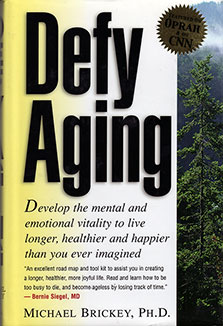
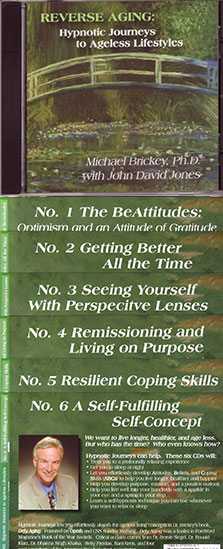
"Dr. Michael Brickey, The Anti-Aging Psychologist, teaches people to think, feel, look and be more youthful. He is an inspiring keynote speaker and Oprah-featured author. His works include:  Defy Aging, 52 baby steps to Grow Young, and Reverse Aging (anti-aging hypnosis CDs). Visit www.NotAging.com for a free report on anti-aging secrets and a free newsletter with practical anti-aging tips."