Take the Defy Aging Quiz

Q:  Dr. Brickey what supplements do you take?


A:  Frankly, I take quite a few because I am at high risk for arteriosclerosis. I think in terms of three types of supplements:


    1. A GOOD MULTIVITAMIN

         In a perfect world, we would get all the vitamin, minerals, and antioxidants from the food we eat. But with less than optimal eating habits, soil depletion, and restaurant foods, most of us can’t count on our eating habits or foods to provide all the vitamins, minerals, and antioxidants we need.


     Generic and popular brands of multivitamins provide the basic vitamins and minerals. A multiple vitamin is far less expensive than taking vitamins and minerals individually. It also insures that vitamins and minerals are in healthy proportions to each other. (Too much of one vitamin or mineral can inhibit the use of certain other vitamins or minerals.)


      Besides cost, the differences between a generic or common brand name multivitamins and premium multiple vitamins are that the premium brands are more likely to:


    • use higher dosages


    • use the most effective variations of vitamins and amino acids
      Example: Vitamin E has eight chemical variations with four tocopherols and four tocotrienols. Many multivitamins use less expensive variations of E rather than the more effective bioidentical d˗alpha variation with d˗gamma tocopherols.


    • use multiple versions of a vitamin.
      Example: Vitamin D has two physiologically relevant forms D2 and D3. While D3 is believed to be metabolized more effectively, the vitamin is poorly understood and D2 may have a unique contribution to our health. Thus, some multiple vitamins include both.


    •  include trace minerals and antioxidants (e.g., extracts from vegetables, fruits, and berries).


     Thus, I take a very good comprehensive multiple vitamin with trace minerals and antioxidants. If you are willing to invest in the extra insurance of a premium multivitamin, there are several highly regarded premium multivitamins. My preference is SeaHealth|Plus, which has 17 fruit and vegetable extracts and 72 trace minerals.


    2. PARTICULAR HEALTH ISSUES


     If you have particular health risks, you may want to consider supplements that help with that issue. For example, if you have frequent urinary tract infections you may want to drink cranberry juice or spare the calories and take cranberry juice extracts (if you aren’t taking SeaHealth|Plus which has cranberry extract anyway). If you recently took an antibiotic, you might want to eat some yogurt that is rich in probiotics or take a probiotic supplement such as acidophilus.


     Being a male I take saw palmetto to reduce my risk or prostate cancer. Since I am high risk for cardiovascular problems, I take supplements as well to enhance cardiovascular health. I get several blood tests a year and use the results to help make adjustments in which supplements I use and the doses. 


    3. FISH OIL
     
        Cardiologists have been behind the times on this but now even the American Heart Association recommends:

Fish intake has been associated with decreased risk of heart disease. On the basis of available data, the American Heart Association recommends that patients without documented heart disease eat a variety of fish – preferably omega-3-containing fish – at least twice a week. Examples of these types of fish include salmon, herring and trout. Patients with documented heart disease are advised to consume about 1 gram of EPA + DHA (types of omega-3 fatty acids), preferably from fish, although EPA+DHA supplements could be considered, but consult with a physician first. For people with high triglycerides (blood fats), 2 to 4 grams of EPA + DHA per day, in the form of capsules and under a physician’s care, are recommended.


     A shift in Americans’ diet to more processed foods, corn oil, and soybean oil greatly increased omega-6 fatty acids in our diets. Further, these days few parents give their children cod liver oil (which is high in omega-3 fatty acids). Consequently, the ratio of omega-3 to omega-6 fatty acids has gone from a healthy 1:2 to 1:20. Having too much omega-6 fatty acids relative to omega-3s results in inflammation. There is an increasing consensus among researchers that inflammation is the common denominator of most chronic diseases including cardiovascular disease and diabetes.


     You could correct the imbalance by eating lots of fish such as tuna, salmon, and sardines, but that would expose you to a lot of PCBs, mercury, and other toxins in the fish. Unless highly refined, cod liver oil has the same problem. The easiest way to increase omega-3s is to take fish oil supplements.


     While an aspirin is an aspirin and vitamin C is vitamin C whether it is generic or a brand name, with fish oil it is extremely important to remove the PCBs, mercury, and other toxins the fish have consumed. This requires an expensive distilling and refining process. The person who has done the most research on fish oil and is extraordinarily thorough in removing the toxins is Dr. Barry Sears. You may choose to take chances on the quality of other vitamins but don’t compromise on quality of the fish oil you consume.


     Dr. Barry Sears is the creator of the Zone Diet, which balances healthy carbohydrates, fats, and proteins in Mediterranean style diet. In his latest best seller, Toxic Fat, Dr. Sears describes how inflammation is a major underlying cause of chronic diseases including cancer, cardiovascular disease, diabetes, and arthritis.

      Benefits of fish oil:


Side effects: While thinning the blood is usually desirable (the reason daily low dose aspirin is recommended), thinner blood slightly increases the risk of bruising or bleeding, nosebleeds, or stroke from hemorrhaging. It tends to have a cumulative effect with aspirin, Plavix or Coumadin.


  • Other health benefits   Research indicates that fish oil also:
    • helps with weight loss
    • helps reduce arthritis, diabetes, and other autoimmune diseases
    • enhances brain functioning and the brain’s gray matter volume
    • reduces macular degeneration (an eye disease)
    • may help with Alzheimer’s, depression, bipolar disorder, and schizophrenia
    • fosters healthy skin, hair, and nails


     With most supplements, the risk from using a generic brand is low—just that they may have cut corners to keep the prices low and dosages may be unreliable. With fish oil, however, the risks are high. Inexpensive fish oil is likely to contain lead, mercury, and PCBs.


      Dr. Barry Sears has focused his career on fish oil. His Omega|Rx fish oil is the gold standard. It goes through two refining processes to make sure it is the purest anywhere—and I believe it is the only fish oil that has every single batch tested. Consequently, it is the best there is and the safest there is. Cut corners if you must on other supplements, but do not cut corners on fish oil.


     I’m delighted to be able to offer you a 10% discount on your first purchase of Omega|Rx, SeaHealth|Plus, and other Zone health, weight loss products, and books.


     Just click here and use the promotional code AGELESS at checkout. There is a lot the zonediet.com website. My recommendation is to select Omega|Rx fish oil and SeaHealth Plus. I also highly recommend a copy of Dr. Sears’ latest best seller, Toxic Fat, in which he shares his latest research on inflammation, metabolism, cardiovascular diseases, diabetes, and what it really takes to lose weight.


CLICK HERE and use the promotional code AGELESS at checkout OR call 1-800-404-8171 and use the promotional code, AGELESS.


If you can just afford two supplements, Omega|Rx and SeaHealth|Plus should be the ones.


OmegaRxSeaHealth Plus

Toxic Fat by Barry Sears: Download Cover

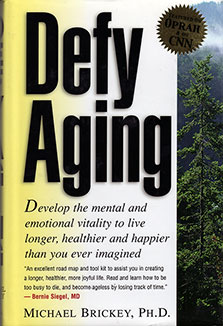
Rave Reviews for Defy Aging


Buy Now

Defy Aging Book “An excellent road map and tool kit to assist you in creating a longer, healthier, more joyful life. Read and learn how to be too busy to die, and become ageless by losing track of time.”
–Bernie Siegel, MD, Author of Love, Medicine, and Miracles and Peace, Love and Healing


“People are living longer and healthier lives. Defy Aging shows us how to do it well. It’s a visionary road map to help us live fuller and richer lives. I highly recommend everyone over 40 to read it!”
–Betty Friedan, Ph.D., Founder of the National Organization of Women and author of The Feminine Mystique and The Fountain of Age


“Dr. Brickey's new book Defy Aging has successfully achieved the near impossible task of distilling thousands of scientific articles and hundreds of books in the field of health and longevity into one easy-to-read compendium of anti-aging science. This is a must-read review book of an emerging new field of anti-aging medical technology which promises many of its readers will see their 150th birthday with full mental and physical faculties intact. I recommend it.”
–Ronald Klatz, M.D., D.O., Founder and President of the American Academy of Anti-Aging Medicine, author of Stopping the Clock and Ten Weeks to a Younger You


Defy Aging coaches and mentors you skill by skill on living longer and taking your life to a higher level. Dr. Brickey, an exceptional life coach, has an astonishing range and depth of knowledge. Defy Aging is a well-written, illuminating, practical guide to living a good life and a long life. I highly recommend.”
–Ben Dean, Ph.D., Founder and President of MentorCoach, The nation’s preeminent training program for clinicians becoming professional coaches


“Starting their own lives trusting no one over thirty, Baby Boomers never expected to age. Now finding themselves well over fifty, they are desperately looking for perpetual youth in all the wrong places. But it is not too late. There is an antidote to aging: read this book!”
–Distinguished Professor Nicholas A. Cummings, Ph.D., Sc.D., An APA past president, President of the Nicholas & Dorothy Cummings Foundation, and author of Focused Psychotherapy


Defy Aging reminds us that “old age ain’t for sissies” but it is a time for discovery, warmth and wisdom, if we follow the road map outlined in this empowering book. I would heartily recommend it for any of us who are aging.”
–Ellen McGrath, Ph.D., Internationally acclaimed executive coach, author of When Feeling Bad is Good, and frequent expert commentator on ABC News, Good Morning America, Fox News and 20/20


“I will be 70 next month and I believe Defy Aging just might help me remain vital for 30 or 40 years more—at least.”
–Sam Keen, Ph.D., men's movement leaders and author of Iron John


Defy Aging is a must read for anyone wanting to live long and well.”
–Dharma Singh Khalsa, M.D., Author of Brain Longevity and Food as Medicine


Defy Aging is a refreshing new way of looking at life. Dr. Brickey brilliantly addresses the mental and emotional aspects of living that are 70% of health and longevity with a practical program. Defy Aging is a book worth reading and a guide worth having.”
–Jack G. Wiggins, Ph.D., Psy.D. A past president of the American Psychological Association (APA)


“Most books about longevity are about pills and diets and say little about the mental and emotional aspects that drive 70% of longevity. Defy Aging is a unique, groundbreaking book that leaves behind conventional thinking and gives a map for living longer, richer, fuller lives. It is a visionary manifesto.”
–Stanley Graham, Ph.D., A past president of the American Psychological Association (APA)


“When Dr. Brickey initially talked to me about living a vital, healthy life for 150 years, I was very skeptical. Defy Aging built such a strong research-based case that I’m now convinced. I have used his materials in my women’s groups and they loved them.”
–Carol Roche, Ph.D., President of LifeCycle Directions. Dr. Roche has doctorates in both physiology and psychology


“What an exceptional book! Doctor Brickey marshals the evidence to prove what many of us have always suspected: longevity is at least 70% mental! Those with the right beliefs, attitudes, coping skills and lifestyles will continue to live well while living long. Those who do not attend to the mental aspects of aging not only have shorter lives, they also have more health problems, more pain and more depression. Do not wait until you are over 50 to read this book. And, do not confuse its easy reading style with a lack of substance. Brickey knows his stuff and knows it well enough to refrain from having to show it off with torturous academic prose.”
–Ron Fox, Ph.D., An APA past president




Buy Now